
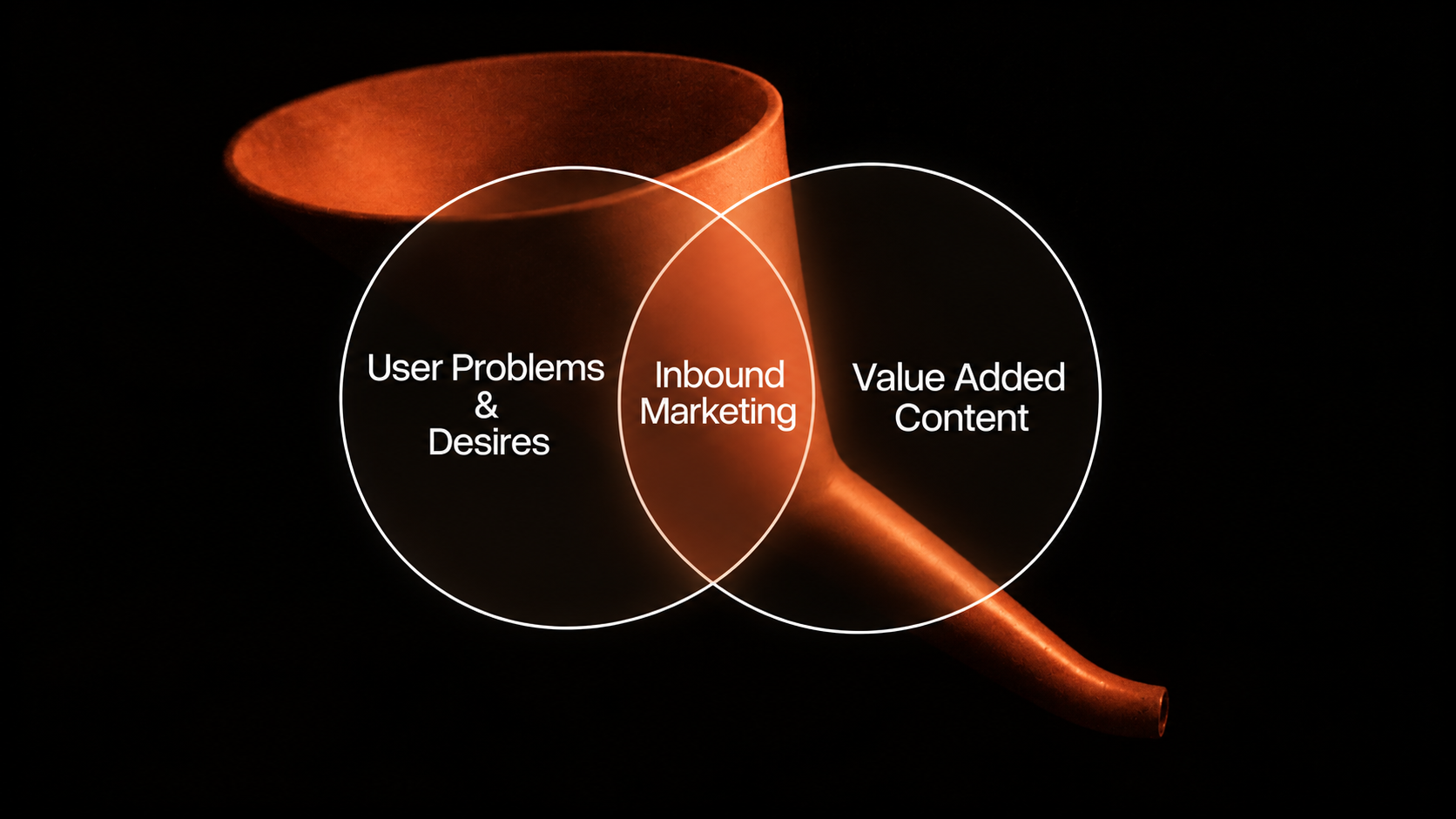


Your (potential) customers have long been searching for solutions to their problems or desires online, completely independently and preferentially. They want to inform themselves independently and expect to find content that suits their needs. Modern inbound marketing addresses precisely these conditions. With the optimal strategy, you ideally reach your target group at the right time with the perfect added value, leaving an impression that is stronger (in terms of sales) than any advertising message. Outbound marketing attracts attention, while inbound marketing brings “secure” deals in the long term!
Unfortunately, however, the methodology also involves a considerable amount of administrative work—especially if your company has a large customer base. Marketing software from HubSpot can help you organize complex processes in one central location and make your activities more efficient and ultimately significantly more effective—even automate them. We'll show you how it works here.
What is inbound marketing and why is it so important today?
Inbound marketing describes a strategy in which companies generate attention through relevant (online) content. Instead of actively interrupting your target group – for example, through advertising – you help them find answers to specific questions. Blog articles, guides, videos, or studies serve as entry points. People thus voluntarily come into contact with your brand because your information offers them real benefits.
The change in purchasing behavior explains why this approach has become so important over the past 15 years. With the almost ubiquitous Internet, there has been a shift in the “balance of power.” Prospective customers do their own research, compare providers, and form an opinion long before they buy or contact sales.
• According to an infographic by MDG, around 70 percent of internet users want to learn about products through content, not traditional ads. Advertising is often perceived as disruptive online and is deliberately ignored.
• This behavior has also become established in the B2B environment. The DemandGen B2B Buyer's Survey 2024 shows that 66 percent of B2B buyers start their research with a Google search. 45 percent go directly to supplier websites, while 31 percent base their decisions on other content. This information process takes place before any conversation with a supplier even begins. Those who are not visible here are practically non-existent.
Inbound marketing responds precisely to this “new” reality. The focus is on presenting your own offering as a comprehensible solution to a specific problem or need. Content is geared toward users' information needs, not internal sales targets. Search engine optimized texts, structured knowledge formats, or explanatory videos ensure that interested parties find exactly the content they need at each point of their customer journey.
The following psychological processes make inbound marketing so effective: People like to make decisions independently. When someone arrives at a solution through their own research, it creates a sense of control and security. Inbound marketing subtly supports this process. You don't demand, you accompany – and still steer them towards your goal. The user ultimately perceives the decision to buy, make contact, submit data, etc. as their own success, even though you have paved the way with appropriate content. This principle not only significantly lowers short-term barriers to purchase, but also strengthens long-term trust in your brand.
Inbound marketing follows what is known as pull logic. Prospective customers approach your company on their own initiative. You attract or “pull” them because you provide the right answers. With HubSpot's platform, you can centrally consolidate relevant content, contact points, and data, thereby systematically supporting your inbound marketing.
Understanding loop marketing as a further development of inbound marketing
Traditional inbound marketing generally works with a linear funnel. People are attracted, convert, buy, and are then considered “closed.” This model works in principle, but is increasingly reaching its limits in today's reality. This is because modern users move across many channels, jump between platforms, and expect immediate answers – often without even visiting a website.
Loop marketing takes these new dynamic circumstances into account. Instead of viewing marketing as a process with a beginning and an end, it understands customer relationships as a continuous cycle. Accordingly, content is not created once and then left to its own devices, but continuously developed. Experiences, interactions, and data flow back permanently and improve all subsequent measures – supported by AI.
The loop consists of four interlocking steps: content is designed, then adapted, amplified through appropriate channels, and finally further developed. Each touchpoint provides new insights that make the next cycle more targeted. The result is a dynamic system that continuously optimizes itself. Loop marketing incorporates all touchpoints and thinks inbound not only on its own website, but across all channels.
Building on the foundation of classic inbound marketing, the strategy ensures that marketing, sales, and service work more closely together. Every contact counts, and every exchange improves the next one. Human expertise, data, AI, and automation work together to create marketing that remains holistic and adaptive.
How does inbound marketing work in practice—with HubSpot?
Inbound marketing is naturally complex and highly individual due to its precise focus on your brand, your products, and ultimately your specific target audience. Nevertheless, implementation always takes place in specific phases that you can use as a guide.
HubSpot supports this process with a variety of solutions and ensures that marketing automation, sales, and service work with the same data. This creates a consistent experience for prospects and customers.
At its core, inbound marketing (ideally) takes place in the following four consecutive stages, which, against the backdrop of modern loop marketing, can be much more dynamic and multi-layered than in the past:
1. Attraction: People become aware of your company.
2. Conversion: Visitors show interest (and leave their contact details).
3. Close: Prospects become customers.
4. Loyalty: Customers remain active and satisfied and recommend your offerings to others.
Each of these phases can be specifically supported with functions from HubSpot CRM, HubSpot Marketing Hub, and the integrated communication and analysis tools.
Preliminary work – lay the foundation
Before you publish content or launch campaigns, your inbound marketing needs a clear direction. Without goals, you can't evaluate results. That's why every successful implementation starts with an honest assessment of the current situation. What do you want to achieve, and why? More qualified inquiries, shorter sales cycles, or better customer loyalty can only be measured if they are clearly defined.
A thorough market and target group analysis is also part of the basic equipment. It's not just about looking at competitors and trends, but also about realistically assessing your own position. What problems do your offerings really solve? What alternatives are available on the market? Only this clarity creates the basis for realistic target KPIs, such as reach, conversion rates, or lead quality.
A central component of this phase is working with buyer personas. This involves developing realistic profiles of typical customers that reflect real needs, expectations, and decision-making factors. A good persona describes demographic characteristics, but also challenges, information behavior, and preferred channels. Knowledge gained from direct customer contact is particularly valuable here. Sales, consulting, or support teams are familiar with questions and objections from practical experience and provide important input for relevant content.
On a technical level, HubSpot provides comprehensive support for this preliminary work. The platform helps to structure target groups, centrally manage contacts, and make interactions traceable. You can easily extract a lot of important persona information from the CRM. Finally, based on this, content can be planned, published, and linked to performance indicators. Page views, form completions, or content downloads are automatically recorded and evaluated as the process continues.
This creates transparency about which topics generate attention and where there is genuine interest. The relevant facts form the starting point for informed decisions, such as the further development of content, formats, or entire campaigns. Instead of relying on assumptions, you can manage your inbound marketing based on facts and optimize it step by step.
Phase 1: Attraction – turn strangers into visitors
The first phase is about reaching the right people. But reach alone is not enough. It is crucial that visitors have a genuine interest in your topics or related products. Relevance arises when content appears exactly when people are searching for relevant solutions.
HubSpot supports this phase with tools for content strategies, search engine optimization, and social media. The content strategy tool helps you identify topics that are relevant to your target audience. Blog posts can be optimized for search engines and published systematically. In addition, content can be distributed via social networks or supported with targeted ads.
At the same time, analysis and reporting functions provide clear insights into performance. You can see which content is being found, how long users stay, and where there is potential for optimization. This means you don't just publish blindly, but take a structured approach – with the possibility of data-based improvement.
Phase 2: Conversion – turn visitors into leads
Once interest has been generated, the next step is to ensure that your visitors take a conscious action (conversion). The conversion can already be the conclusion, i.e., a purchase. In B2B inbound marketing, however, the initial goal is usually to generate leads. The goal is to obtain contact information without applying pressure. Trust plays a central role here.
HubSpot provides tools such as calls-to-action (CTAs), forms, and landing pages for this purpose. In a simple example, the CTA leads to a page that offers clear added value, such as a guide, checklist, or webinar. In return, the user leaves their data. This first interaction is considered a micro-conversion.
All information is automatically stored in HubSpot CRM. From this moment on, content can be personalized. Smart content, automated emails, and coordinated workflows ensure that every contact always receives relevant information – completely independently. In addition, social media posts and ads enable you to target specific audiences, which further strengthens loyalty. External tools can be integrated as needed to meet individual requirements.
Phase 3: Closing – turn leads into customers
Not every lead is at the same stage in the decision-making process, which makes meaningful prioritization extremely important.
HubSpot CRM offers comprehensive lead scoring for this purpose. Contacts are evaluated based on defined criteria, such as interactions with content or demographic characteristics. This allows your sales team to effortlessly identify which leads are ready for a conversation. Automated email sequences deliver targeted content such as case studies or appointment offers as part of lead nurturing, allowing you to continue to develop potential buyers.
Marketing, sales, and service all have access to the same information. The shared inbox for conversations ensures that communication runs smoothly. Content can be provided in various formats, including video, and is easy to share. This creates a consistent process right through to the close.
Phase 4: Inspire – turn customers into advocates
After the purchase, the actual relationship management begins, with the goal of keeping customers satisfied. In the best case scenario, they will not only remain loyal, but also recommend you to others! This phase strengthens your long-term sales and brand trust.
HubSpot supports you here with specific onboarding workflows, personalized newsletters, and automated follow-ups, which are of course data-driven. Customer success programs can be managed using clear metrics. In addition, email campaigns, community formats, and social sharing incentives help to actively engage customers and keep them on board.
Continuous added value generates ongoing attention, sustained interest, and ultimately lasting loyalty to your brand. Repeat purchases become more likely and recommendations more frequent.
Conclusion
One thing is certain: inbound marketing is not a sure-fire success, because content must be precisely planned, processes coordinated, and results continuously reviewed. However, the effort can pay off immensely due to the strong psychological effect principle: people prefer to make decisions independently. Those who (always) provide their target group with helpful information at the very moment when a real problem or need arises build trust and remain positively remembered (in the long term).
HubSpot makes this approach significantly more efficient/effective. The platform supports every phase of inbound marketing and bundles all activities in one central location. Content, contacts, communication, and evaluations are interlinked instead of being stored in separate systems. This results in clear, largely automated processes and traceable results that can be optimized based on data. This is particularly important in conjunction with the modern loop marketing concept, which makes it clear that inbound marketing should no longer be thought of as linear, but rather as a learning cycle that improves with every interaction.
How you fill in the individual phases is, of course, a completely different matter, but even here, HubSpot can help you with training, courses, and tutorials at the HubSpot Academy.
FAQ
What are the four phases of inbound marketing?
In the first phase, inbound marketing aims to attract the right people with relevant content. Visitors are then converted into contacts through compelling added value. In the third phase, qualified leads become customers. Finally, the goal is to promote long-term loyalty and referrals, which in turn is achieved through long-term content added value. All phases build logically on each other.
Is inbound marketing important?
Yes. The way people gather information before making purchases has changed fundamentally over the last 15 years. Prospective customers prefer to do their own research, compare providers, and form an opinion early on. Inbound marketing adapts to this development and accompanies (potential) customers throughout their decision-making process. Those who provide relevant content are perceived as competent and increase the likelihood of closing a deal.
How much does inbound marketing with HubSpot cost?
The cost consists of two parts. First, there are the costs for HubSpot's platform. The Marketing Hub is available in various packages. Prices currently start at around $20 per month (as of February 2026) for basic features and increase depending on the integrated modules and number of contacts.
On the other hand, there are costs for implementing the inbound strategy itself. These include, above all, content creation, campaign planning, optimization, and, if necessary, external support for systematic implementation. These costs vary greatly depending on the objectives and scope. The software forms the technical basis, but the actual success comes from consistent strategic work.
Note: There are affiliate links in this article. If you make a purchase using these links, we'll earn a small commission. Of course, the price won't change for you.
Posted by:

Jens is the co-founder of bakedwith, a boutique consultancy firm specialising in smart automation and AI. He helps medium-sized companies and corporations to optimise processes, reduce manual work and achieve growth through efficient workflows. Previously, he was Growth Lead at OMR and worked as a freelancer, helping numerous companies optimise their CRM and automation systems. Jens is passionate about combining growth and efficiency to enable teams to focus on what matters most.


.webp)
.webp)
.webp)