

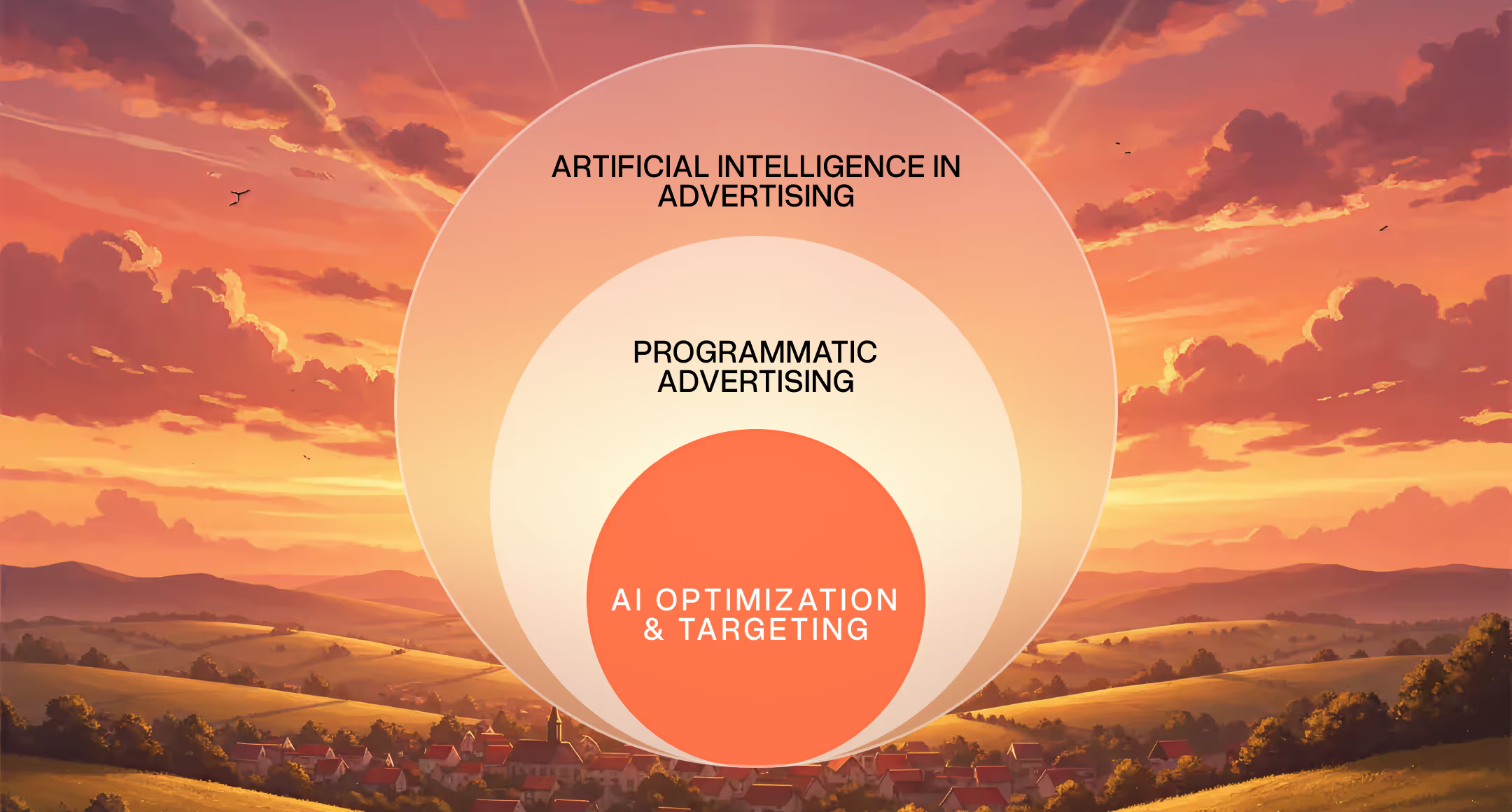

The world of digital advertising moves at an incredible speed. The days of manually negotiating ad buys with individual publishers are quickly fading. Today, automation is key, and at the heart of this revolution is programmatic advertising with AI. This powerful combination uses machine learning algorithms to automate the purchase and placement of digital ads in real-time. This ensures that brands reach the right person, with the right message, at the right moment, all while optimizing their ad spend for maximum impact.
This process might sound complex, but it's transforming how businesses approach their marketing efforts. By leveraging artificial intelligence, advertisers can analyze vast amounts of data to make smarter, faster decisions. This leads to more efficient campaigns, better targeting, and a higher return on investment.
The Core of Programmatic: Automation Meets Data
At its foundation, programmatic advertising is the automated buying and selling of digital ad space. Instead of human negotiations, this process uses platforms and algorithms to facilitate transactions in milliseconds. But where does the intelligence come from? The real power is unlocked when you combine this automation with AI.
Artificial intelligence provides the brainpower needed to sift through mountains of user data. It analyzes behavior, preferences, and demographics to predict which users are most likely to convert. This is a significant leap from traditional methods, which often relied on broader, less precise targeting. With AI, every ad impression is an opportunity to learn and refine the campaign's performance.
One of the key components in this ecosystem is the use of data management platforms (DMPs). These platforms act as a central hub, collecting, organizing, and activating large sets of first-, second-, and third-party audience data. AI algorithms then use the information within DMPs to build detailed audience segments, enabling hyper-targeted campaigns that resonate with specific user groups.
How Programmatic Advertising with AI Delivers Results
Integrating AI into programmatic strategies isn't just a trend; it's a fundamental shift that produces tangible benefits. The algorithms work tirelessly behind the scenes to enhance every aspect of a campaign. They move beyond simple automation to intelligent optimization, making decisions that a human team could never manage at such scale and speed.
Real-Time Bidding and Budget Optimization
Real-time bidding (RTB) is a cornerstone of programmatic advertising. It’s an auction where ad impressions are bought and sold in the time it takes for a webpage to load. AI supercharges this process in several ways:
- Predictive Bidding: AI algorithms analyze historical data to predict the value of an individual ad impression. They can determine the likelihood of a user clicking or converting and adjust the bid price accordingly. This prevents overspending on low-value impressions and focuses the budget on opportunities with the highest potential return.
- Pacing and Allocation: Managing a campaign budget is a delicate balance. AI ensures the budget is spent evenly throughout the campaign duration, avoiding the common issue of exhausting funds too early. It can also reallocate budget in real-time to the best-performing channels, ad formats, or audiences.
Advanced Audience Segmentation and Targeting
Reaching the right audience is the most critical element of any successful ad campaign. AI takes audience targeting to a new level of precision. Instead of relying on broad demographic categories, AI can identify and create nuanced audience segments based on complex behavioral patterns.
It can build lookalike audiences by analyzing the characteristics of your most valuable existing customers and finding new users who share similar traits. Furthermore, AI can predict user intent, identifying individuals who are actively in the market for a product or service. This shift from reactive to predictive targeting is a game-changer for driving conversions. Understanding the fundamentals of how artificial intelligence works can provide deeper insight into these powerful capabilities.
Dynamic Creative Optimization (DCO)
A one-size-fits-all ad creative is no longer effective. Dynamic Creative Optimization (DCO) uses AI to tailor ad content for individual users. The system can assemble different ad components like headlines, images, calls-to-action, and colors in real-time to create the most compelling version for each person.
For example, an e-commerce brand could show a user a product they previously viewed, feature a promotion relevant to their location, and use language that has historically performed well with their demographic. This level of personalization dramatically improves engagement and conversion rates, making it a key part of effective programmatic advertising with AI. This is a prime example of successful branding with ai, where the brand message adapts to be more personally relevant.
The Future is Smarter: Emerging Trends
The synergy between AI and programmatic advertising is constantly evolving. As technology advances, we can expect even more sophisticated applications that will continue to redefine the industry. Pairing these advanced advertising strategies with a strong foundation in marketing automation can create a seamless and powerful customer journey.
One emerging area is the use of AI for fraud detection. Ad fraud is a significant concern, costing advertisers billions annually. AI algorithms can analyze traffic patterns in real-time to identify and block fraudulent bots and non-human traffic, ensuring that ad budgets are spent on reaching real people.
Another trend is the application of AI to contextual targeting. With the phasing out of third-party cookies, contextual relevance is becoming more important. AI can analyze the content of a webpage with incredible accuracy to determine its topic and sentiment, allowing ads to be placed in brand-safe and highly relevant environments. You can even find accessible tools to experiment with, as discussed in posts about artificial intelligence for free.
Getting Started with Programmatic AI
Adopting programmatic advertising with AI may seem daunting, but many platforms and agencies specialize in this area. These programmatic advertising services provide the technology and expertise needed to launch and manage effective campaigns. When choosing a partner, look for one that demonstrates a deep understanding of AI-driven optimization and has a track record of delivering measurable results.
The key is to start with clear goals. Do you want to increase brand awareness, drive website traffic, or generate leads? Your objectives will inform the strategy and the key performance indicators (KPIs) used to measure success. A good partner will help you navigate the complexities and unlock the full potential of this powerful technology.
In conclusion, the fusion of AI with programmatic advertising represents a monumental leap forward for the digital marketing industry. It transforms ad buying from a manual, often inefficient process into a highly intelligent, automated system that drives superior results. By leveraging real-time data analysis, predictive modeling, and dynamic personalization, programmatic advertising with AI allows brands to connect with consumers more effectively than ever before. To explore how these advanced solutions can elevate your brand, visit us at bakedWith.
FAQ
How is AI used in programmatic advertising?
AI is used to analyze vast datasets in real-time to make automated decisions about ad buying. Its key functions include optimizing ad spend through predictive bidding, identifying and segmenting audiences with high precision, personalizing ad creatives dynamically for individual users, and detecting and preventing ad fraud.
What are the 4 types of programmatic advertising?
The four main types of programmatic deals are:
- Real-Time Bidding (RTB): An open auction where ad space is sold to the highest bidder in real-time.
- Private Marketplace (PMP): An invite-only auction where a select group of advertisers can bid on a publisher's inventory.
- Preferred Deals: A one-to-one deal where a publisher offers ad inventory to a specific advertiser at a fixed price before it's made available in open auctions.
- Programmatic Guaranteed (or Direct): A direct deal where inventory and pricing are guaranteed, but the transaction is automated through programmatic platforms.
What is the purpose of data management platforms (DMPs) in programmatic advertising?
Data Management Platforms (DMPs) act as centralized warehouses that collect, organize, and segment large amounts of first-party (your own), second-party (a partner's), and third-party (external provider's) data. In programmatic advertising, DMPs are crucial for creating detailed audience profiles that AI algorithms can use to execute highly targeted and personalized ad campaigns.
Can you use AI in advertising?
Absolutely. AI is widely used in advertising to automate processes, gain deeper insights from data, and improve campaign performance. Beyond programmatic buying, AI is used for market trend analysis, generating ad copy and creative ideas, powering chatbots for customer engagement, and measuring campaign effectiveness with advanced analytics.
How does programmatic advertising with AI improve ROI?
It improves Return on Investment (ROI) by increasing efficiency and effectiveness. AI-powered bidding ensures that ad spend is focused on the most valuable impressions, reducing wasted budget. Hyper-targeted ads and personalized creatives lead to higher engagement and conversion rates. Finally, fraud detection capabilities protect the budget from being spent on non-human traffic, ensuring that more of the investment reaches actual potential customers.
Posted by:

Jens is the co-founder of bakedwith, a boutique consultancy firm specialising in smart automation and AI. He helps medium-sized companies and corporations to optimise processes, reduce manual work and achieve growth through efficient workflows. Previously, he was Growth Lead at OMR and worked as a freelancer, helping numerous companies optimise their CRM and automation systems. Jens is passionate about combining growth and efficiency to enable teams to focus on what matters most.

.webp)

.webp)
.webp)